
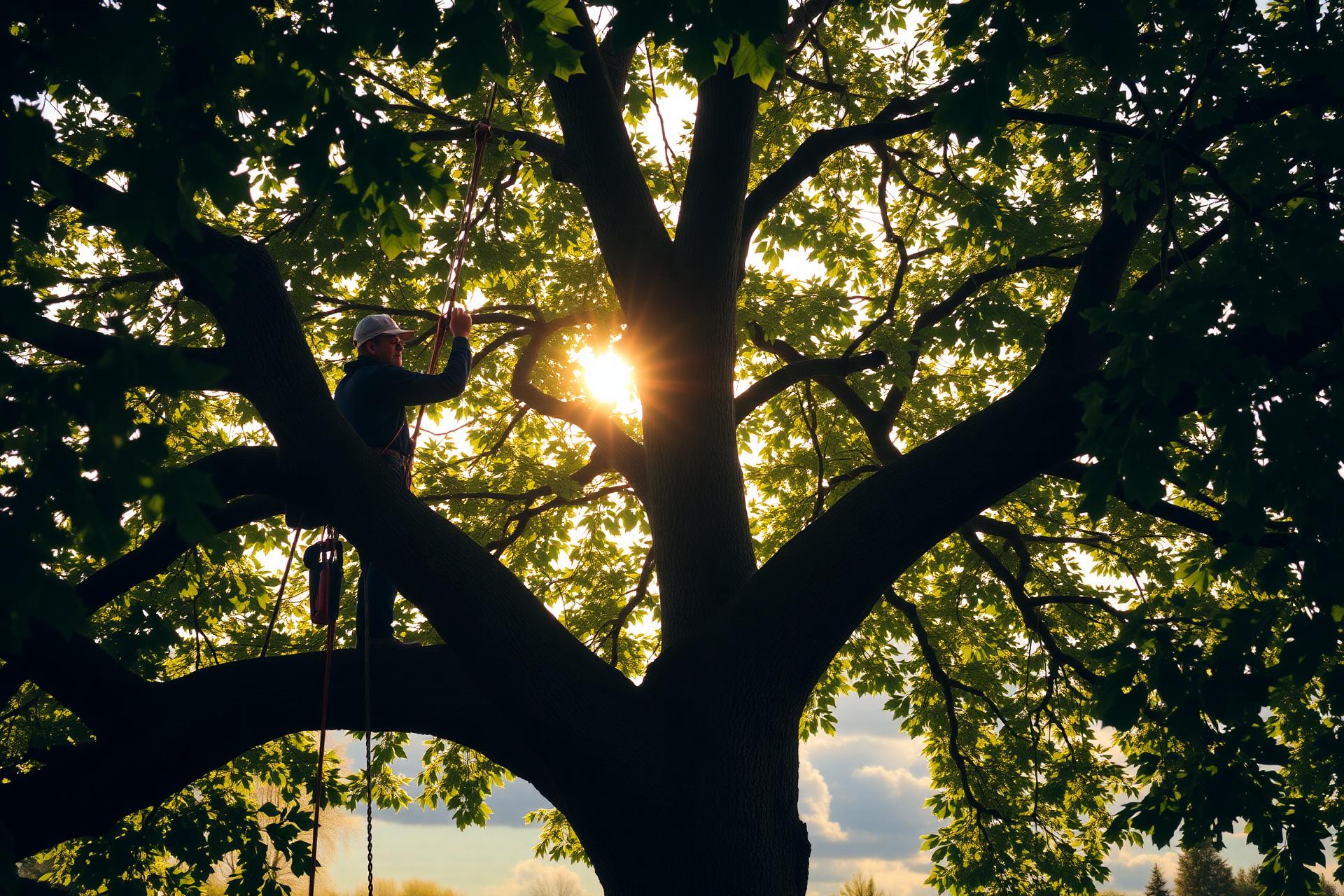
Total Crown Reduction
Reduce the whole canopy, height and spread, for a smaller, balanced tree.
Overview
What total reduction actually involves
An overall crown reduction shortens both the height and the lateral spread of a tree's canopy in proportion, leaving a smaller, naturally shaped crown. It is the most common reduction we carry out on large suburban trees that have outgrown their setting.
Each major leader and lateral branch is shortened back to a suitable secondary growth point, removing typically 10–30% of the canopy while preserving the tree's natural form. All cuts are made to BS 3998 standard.
Typical reduction
10–30% of canopy
Results last
3–5 years
Impact on tree
Medium
Best for
- Large trees encroaching on buildings or power lines
- Reducing wind sail on exposed mature broadleaves
- Restoring a balanced shape after years of unmanaged growth
- Reducing weight on long, over-extended limbs
Not ideal for
- Conifers, which generally don't respond well to crown reduction
- Very young trees that need formative pruning instead
- Trees in serious decline where removal may be safer
Pros & cons
- Keeps a mature, well-loved tree on site
- Reduces structural risk in storms
- Improves the tree's long-term form
- TPO and Conservation Area work managed for you
- Will need repeating every few years
- Removes some of the canopy you may enjoy
- Best done in dormant or late-summer windows for some species
How it compares
Total Reduction vs other reductions
| Reduction type | Best for | Typical reduction | Results last | Impact on tree |
|---|---|---|---|---|
| Total Reduction This page | Large trees encroaching on buildings or power lines | 10–30% of canopy | 3–5 years | Medium |
| Width Reduction | Branches overhanging roofs, conservatories or garages | 1–3 m off the spread | 3–4 years | Low |
| Height Reduction | Trees taller than their setting can sustain | 2–4 m off the height | 4–6 years | Medium |
| Selective Reduction | Storm-damaged or split limbs | 1–4 limbs treated | Permanent for removed limbs | Low |
All four reduction types we carry out, with the page you're on highlighted.
How we do it
On-site process
- 1. Site assessment and species-specific plan agreed.
- 2. Tree Preservation Order or Conservation Area notice handled if needed.
- 3. Climbing arborist sets ropes; ground team rigs cut sections down.
- 4. Each cut shaped back to a healthy lateral or growth point.
- 5. All arisings chipped, logged or removed; site swept clean.
Still not sure?
Total Crown Reduction FAQs
How much can you safely take off in one go?
BS 3998 caps a single reduction at around 30% of the live crown. Taking more than that risks excessive epicormic regrowth and stress on the tree.
Will the tree grow back the same shape?
A well-executed reduction leaves the tree looking naturally smaller, not pollarded. New growth fills out the reduced crown over the next two seasons.
Related
Other reduction types
Tree outgrown its setting? Let's reduce it properly.
Free no-obligation site visit, fixed quotes, UK-wide coverage.