
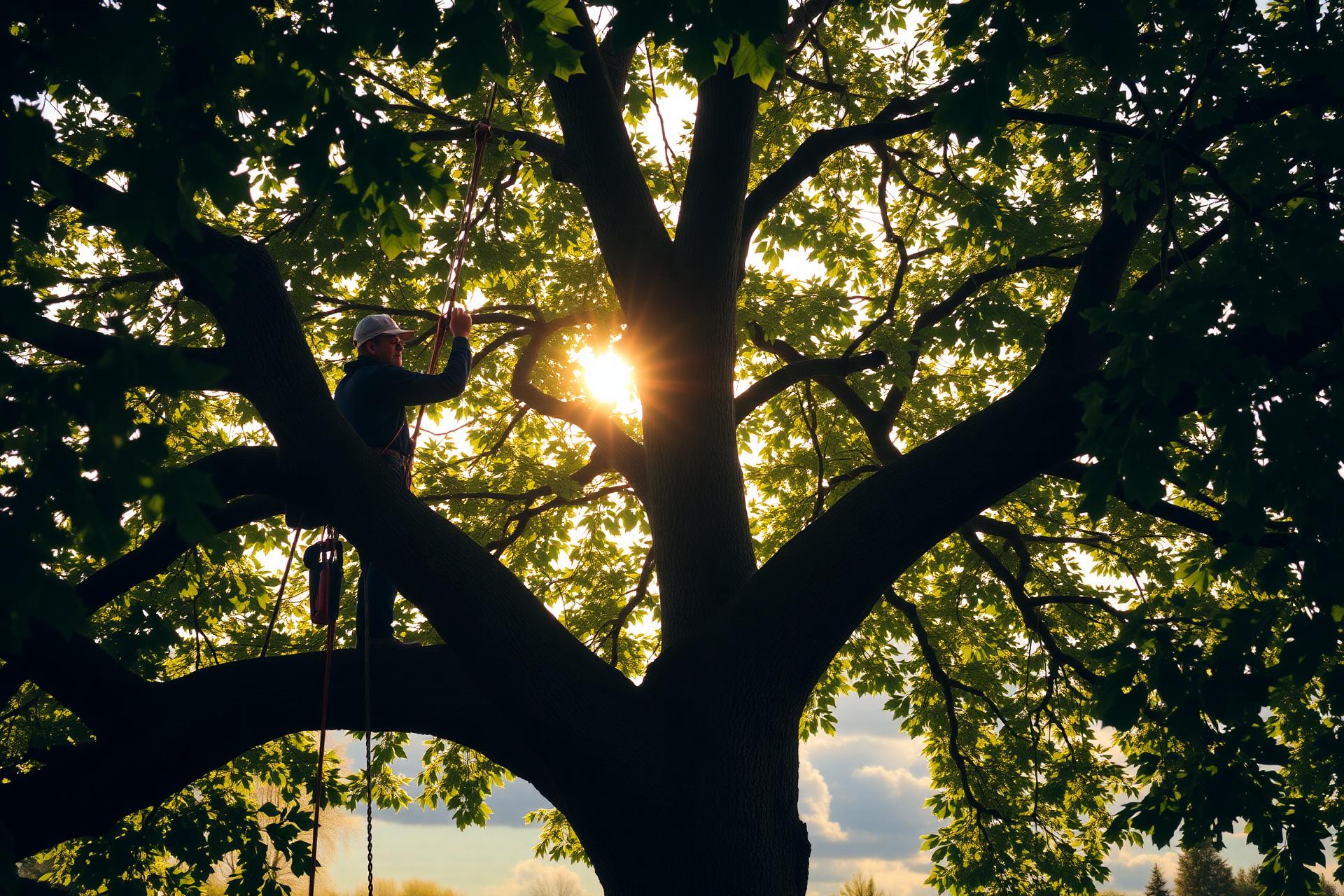
Crown Reduction for Ash Trees
Fraxinus excelsior
Ash is one of the UK's most common large trees. Ash dieback has changed what crown reduction means for it.
Mature height
20–25m
Mature spread
15–20m
Annual growth
30–60cm
Safe distance on clay
21m (NHBC Zone H)
Why reduce a ash
The case for reduction
Ash trees in good health are a moderate to high demand species for crown reduction, they grow to significant size, develop wide-spreading canopies, and frequently overhang boundaries and buildings. The picture has been complicated significantly by ash dieback, which now affects a large proportion of the UK's ash population and changes both the suitability for reduction and the urgency of assessment.
Species profile
- Mature height
- 20–25m
- Mature spread
- 15–20m
- Growth rate
- Moderate to fast
- Annual growth
- 30–60cm per year
- Lifespan
- 200–400 years
- Commonly found in
- Gardens, field boundaries, woodlands, mixed hedgerows, river valleys
- TPO likelihood
- Moderate
- Clay planting distance
- 21m on high-shrinkage clay (NHBC Zone H)
How it responds
- Tolerance
- Good in healthy trees; reduced in dieback-affected specimens, A healthy ash tolerates crown reduction well. A tree showing significant crown dieback from ash dieback disease (Hymenoscyphus fraxineus) may not be a suitable candidate, removing more live wood from an already stressed tree can accelerate decline.
- Regrowth vigour
- Variable, strong in healthy trees, weak in dieback-affected trees, An ash dieback-affected tree may regrow poorly after reduction, making the investment in the work questionable if the tree's prognosis is poor.
- Max reduction
- 25% per visit, No more than 25% in a single visit for healthy specimens. Less, or no reduction at all, may be appropriate for dieback-affected trees, an arborist's assessment is essential first.
When to do the work
Best season: Late winter, January and February. Dormancy period, low fungal pressure. Standard late-winter timing applies for healthy trees.
Avoid: No specific seasonal restriction for healthy ash beyond nesting season. Ash does not have the disease-timing constraints of Prunus or the sap bleed issue of birch. Dieback-affected trees should be assessed before work at any time of year.
Nesting: Nest check required before any work between March and August.
Warning signs to look for
- • Crown dieback, dead or dying branches in the upper canopy, which may indicate ash dieback rather than a crown reduction need
- • Branches overhanging boundaries or approaching rooflines
- • A noticeably thinning canopy combined with basal shoots, a stress response pattern
- • The tree hasn't been assessed since ash dieback arrived in your area
Disease & pest notes
Ash dieback (Hymenoscyphus fraxineus) is now widespread across the UK. Forest Research estimates the majority of the UK's ash population will eventually be affected. Before any reduction work is specified, an arborist should assess the level of crown dieback and the tree's likely prognosis. Reduction is generally not recommended for trees showing more than 50% crown dieback. Report suspected ash dieback to Forest Research via TreeAlert.
Aftercare
For healthy ash: monitor for dieback development after reduction and assess at each inspection whether the tree remains a good candidate for ongoing management. For mildly affected trees: reduced maintenance cycles and conservative reduction percentages are appropriate. The long-term prognosis of any ash tree should be part of every discussion about investment in reduction work.
Legal considerations
Ash trees can carry TPOs. In areas where ash dieback is causing widespread mortality, some local authorities are reviewing TPO status on affected trees, contact your LPA for current policy. Conservation area rules apply as standard. Crown dieback on a TPO ash may strengthen the case for a removal consent application if the tree's prognosis is poor.
Cost indicator
Moderate to high depending on size and access. The assessment element, establishing dieback status before specifying work, adds an important step that good arborists will include as part of any quote.
FAQs
Ash reduction questions
My ash tree has lots of dead branches at the top. Does it need a crown reduction?
Upper crown dieback in ash is a significant indicator of ash dieback disease (Hymenoscyphus fraxineus). Before specifying any reduction, an arborist should assess the extent of dieback and the tree's likely prognosis. A heavily affected tree may not be a suitable candidate for reduction at all.
Can an ash tree with dieback be reduced?
It depends on the extent of the dieback and the tree's overall condition. Mild to moderate dieback does not automatically rule out reduction, but the work specification and the investment decision should be considered in light of the tree's longer-term outlook. An arborist's assessment is the essential first step.
Is ash a protected tree?
Ash trees can be TPO-protected. Some local authorities are reviewing TPO orders on ash trees affected by dieback, but you should check with your LPA before assuming a TPO no longer applies. Conservation area rules always apply regardless of dieback status.
Other species
Browse more trees
Oak
Quercus robur
The most common large tree in English gardens. And one of the most commonly protected.
Sycamore
Acer pseudoplatanus
Fast, vigorous, and seemingly everywhere. Sycamore is the tree that never quite fits the space it's been given.
Common Lime
Tilia × europaea
The most forgiving tree to reduce. Also the one that grows back fastest.
Tree outgrown its setting? Let's reduce it properly.
Free no-obligation site visit, fixed quotes, UK-wide coverage.