
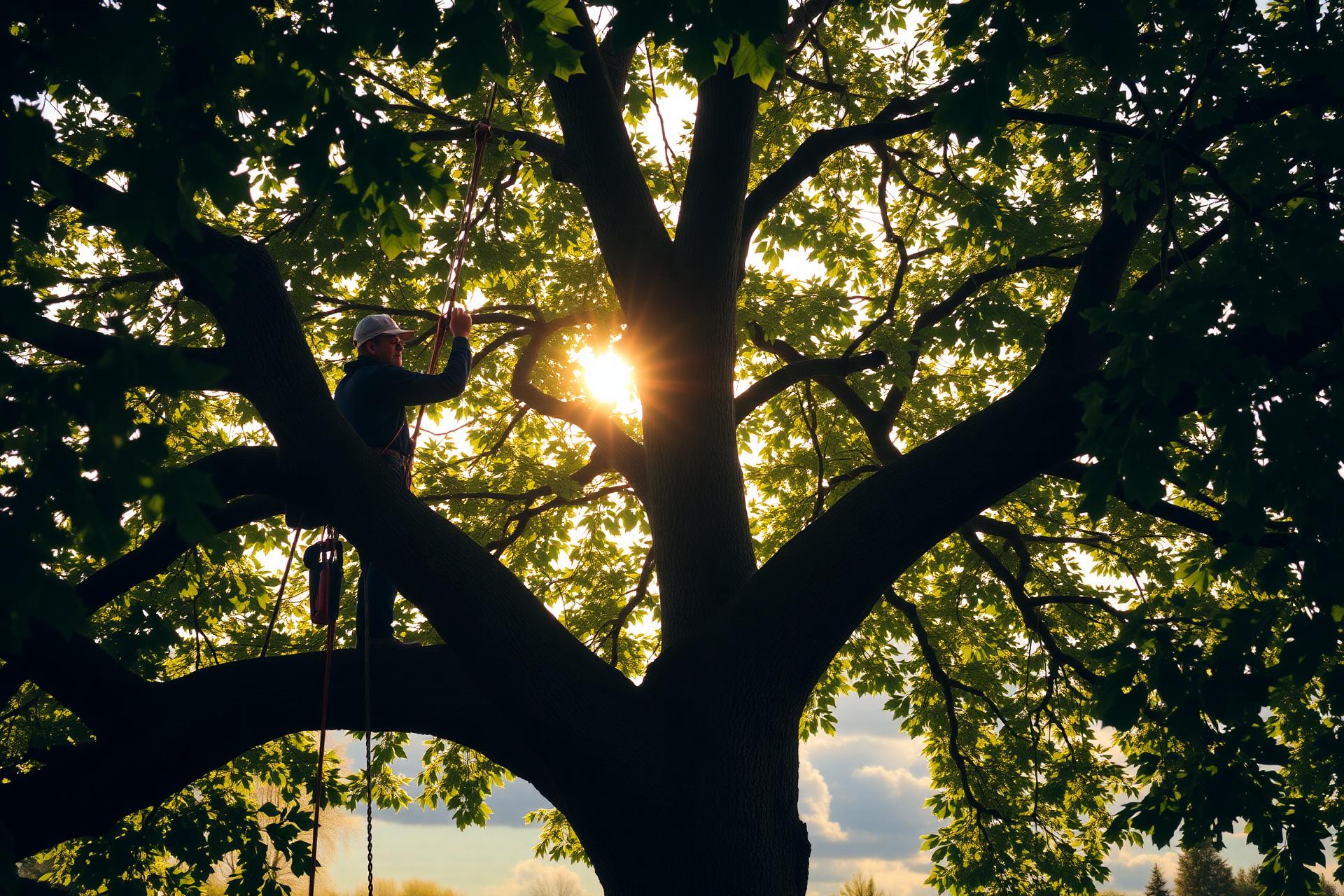
Crown Reduction for Beech Trees
Fagus sylvatica · also known as Common Beech, European Beech
Magnificent at maturity. Less forgiving of poorly timed or over-specified reduction than most people realise.
Mature height
20–30m
Mature spread
15–25m
Annual growth
20–40cm
Max reduction (young)
25% per visit
Why reduce a beech
The case for reduction
Mature beech trees develop wide, dense crowns that create deep shade and frequently overhang neighbouring properties or buildings. Beech hedges that have been allowed to grow into trees are a common source of crown reduction enquiries, what was a 2-metre hedge is now a row of 10-metre trees. The species is sensitive enough to reduction technique that qualified arborists and proper specification matter more than with more forgiving species.
Species profile
- Mature height
- 20–30m
- Mature spread
- 15–25m
- Growth rate
- Moderate
- Annual growth
- 20–40cm per year
- Lifespan
- 300+ years
- Commonly found in
- Large gardens, estates, parks, hedgerows (as beech hedge), woodland edges
- TPO likelihood
- High, mature beeches are among the most commonly TPO-protected trees
- Clay planting distance
- 15m on high-shrinkage clay (NHBC Zone H)
How it responds
- Tolerance
- Good in younger trees; more sensitive in older specimens, Young to middle-aged beech (up to around 100 years) responds well to properly specified crown reduction. Older, more mature beech is less tolerant, the compartmentalisation response slows with age and large wounds can become entry points for decay.
- Regrowth vigour
- Moderate, Beech regrowth is steady rather than vigorous. A well-reduced beech typically requires follow-up work every 5–7 years.
- Max reduction
- 25% per visit, Maximum 25% for younger specimens. Older beeches should be treated more conservatively, 15–20%, and large cuts avoided. Always specify work to BS 3998:2010.
When to do the work
Best season: Late winter, January to early March. Dormancy period. Late-winter wounds heal productively through the growing season. Beech is particularly responsive to the improved healing conditions of approaching spring growth.
Avoid: Autumn, October and November. Fungal spore counts peak in autumn and beech is susceptible to a range of fungal pathogens. Wounds made in autumn heal more slowly and the risk of fungal entry is higher.
Nesting: Nest check required before any work between March and August.
Warning signs to look for
- • Dense canopy creating significant and worsening shade to the south of the property
- • Branches extending over buildings or neighbouring properties at considerable spread
- • Deadwood visible in the crown, beech dieback can be a sign of drought stress or disease
- • Bracket fungi on or near the trunk base, a significant structural concern requiring specialist assessment
Disease & pest notes
Beech bark disease (caused by woolly beech scale and subsequent fungal infection) and Phytophthora root rot are the primary health concerns for UK beeches. Beech leaf disease (Neonectria ditissima complex) is also present. Bracket fungi on mature beeches, particularly Ganoderma and Meripilus, indicate significant internal decay and should be assessed by a specialist before any reduction is specified. A beech with substantial fungal fruiting bodies may not be a suitable candidate for crown reduction.
Aftercare
Monitor cut points on older specimens carefully over the first two growing seasons, slower callus development than on younger trees is normal, but absence of callus development may indicate an underlying health issue. Avoid any disturbance to the soil beneath the canopy in the year following reduction.
Legal considerations
Mature beeches are among the most commonly TPO-protected trees in England. They are also frequently featured in conservation area settings. Always check for TPO status before commissioning work. An arborist's report supporting a TPO consent application for beech is strongly advisable, the LPA will want evidence that the work is both necessary and properly specified.
Cost indicator
Moderate to high depending on size and access. The sensitivity of older specimens and the importance of correct specification mean this is not a species where choosing the cheapest quote is advisable.
FAQs
Beech reduction questions
My beech hedge has grown into a row of large trees. Can they all be reduced at once?
Yes, but the work should be specified carefully, particularly if the trees are old or if any show signs of stress or disease. A qualified arborist should assess the row before work starts and specify an appropriate reduction percentage for the age and condition of the trees.
There is a fungal bracket on my beech tree. Can it still be reduced?
This requires specialist assessment before any work is specified. Bracket fungi on mature beech, particularly Ganoderma or Meripilus, indicate significant internal decay. The structural implications of the decay need to be assessed before deciding whether reduction, other crown work, or removal is the appropriate course of action.
How much can a mature beech be reduced?
For older specimens, 15–20% is a more appropriate target than the 25% that is reasonable for a younger tree. The compartmentalisation response slows with age, large wounds become harder to seal, and the stress of heavy reduction on an old tree can trigger problems that would not affect a younger specimen.
Other species
Browse more trees
Oak
Quercus robur
The most common large tree in English gardens. And one of the most commonly protected.
Sycamore
Acer pseudoplatanus
Fast, vigorous, and seemingly everywhere. Sycamore is the tree that never quite fits the space it's been given.
Common Lime
Tilia × europaea
The most forgiving tree to reduce. Also the one that grows back fastest.
Tree outgrown its setting? Let's reduce it properly.
Free no-obligation site visit, fixed quotes, UK-wide coverage.