
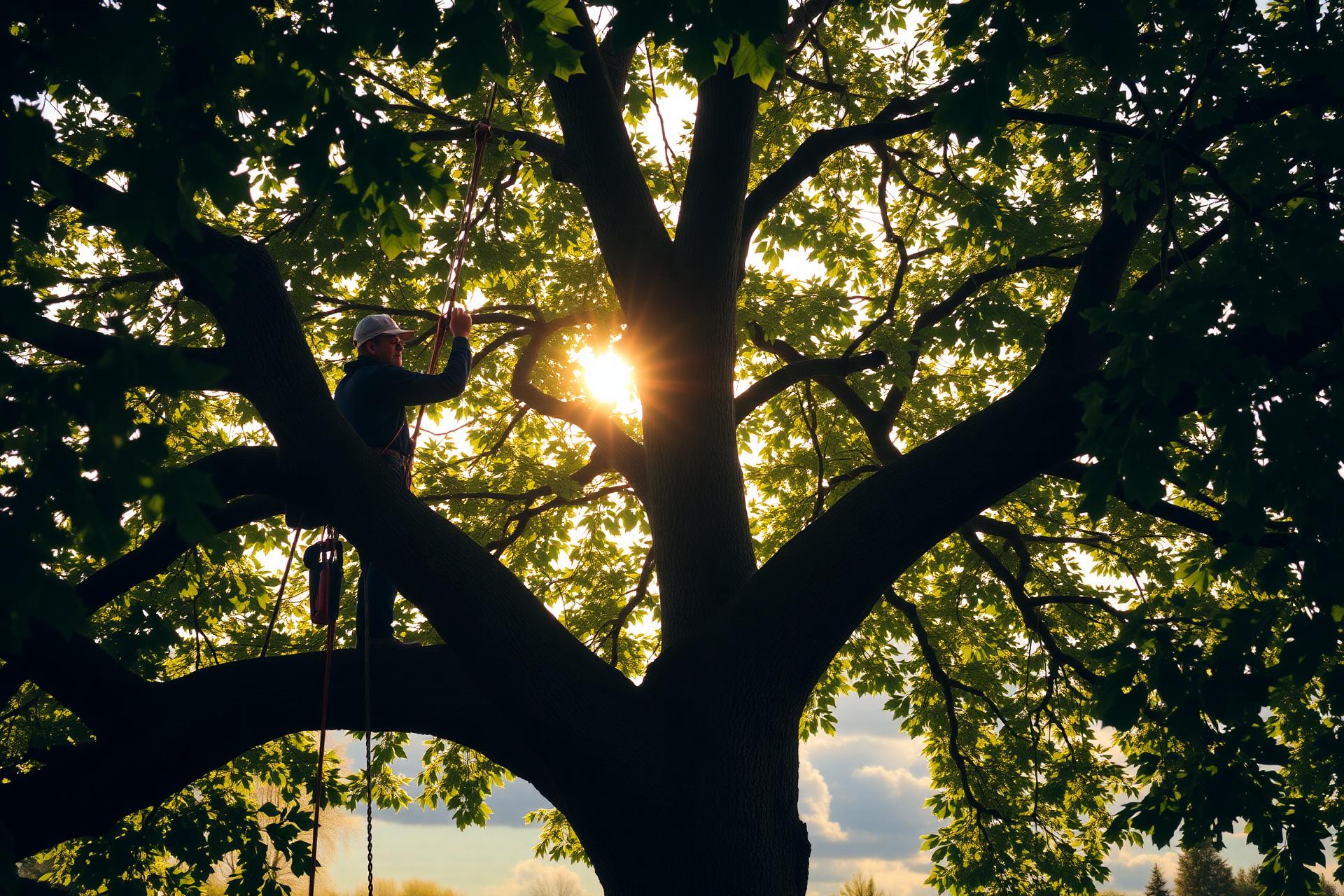
Crown Reduction for Sycamore Trees
Acer pseudoplatanus · also known as Sycamore Maple
Fast, vigorous, and seemingly everywhere. Sycamore is the tree that never quite fits the space it's been given.
Mature height
22–25m
Mature spread
15–20m
Annual growth
30–60cm
Max recommended reduction
30% per visit
Why reduce a sycamore
The case for reduction
Sycamore grows fast and does not stop. Self-seeded specimens are common in gardens where nobody planted them, and by the time they are noticed they are already 8–10 metres tall. Even deliberately planted sycamores frequently outgrow the space within 15–20 years. Dense shade, heavy seed drop, and vigorous surface roots make unmanaged sycamores a regular source of neighbour disputes.
Species profile
- Mature height
- 22–25m
- Mature spread
- 15–20m
- Growth rate
- Fast
- Annual growth
- 30–60cm per year
- Lifespan
- 200–400 years
- Commonly found in
- Gardens of all sizes, boundaries, roadsides, urban spaces, often self-seeded rather than deliberately planted
- TPO likelihood
- Moderate, less commonly protected than oak or beech, but TPOs do occur on mature specimens
- Clay planting distance
- 17m on high-shrinkage clay (NHBC Zone H)
How it responds
- Tolerance
- Very good, Sycamore is one of the most reduction-tolerant species in the UK. It handles significant crown removal well and compartmentalises wounds effectively.
- Regrowth vigour
- Very high, This is the key management challenge. Sycamore regrows prolifically after reduction, particularly epicormic growth along major branches. Without follow-up management, it can return to its pre-reduction size within 3–5 years.
- Max reduction
- 30% per visit, Up to 30% can be removed in a single visit. The tree's tolerance and vigour both support a more substantial reduction than many other species.
When to do the work
Best season: Late winter to early spring, January through March. Dormancy period minimises stress. Wounds begin healing as growth starts in spring.
Avoid: No species-specific seasonal restriction beyond the nesting season. Standard nesting season restrictions (March–August) apply as with all trees.
Nesting: Nest check required before any work between March and August.
Warning signs to look for
- • Rapid annual height gain, sycamore can add 60cm in a single season
- • Dense shade across the garden from late spring onward
- • Helicopter seed drop across the garden and neighbouring properties
- • Epicormic shoots along the trunk or major limbs indicating stress or a previous topping
Disease & pest notes
Sooty bark disease (Cryptostroma corticale) is the primary concern, a stress-related fungal disease that produces bark loss and dark powdery spores. It has increased in prevalence during recent drought summers. An arborist should assess any sycamore showing bark irregularities before specifying reduction work. Tar spot (Rhytisma acerinum) is visible on leaves but cosmetic only.
Aftercare
Plan for follow-up. Sycamore's regrowth vigour means it is not a tree you reduce once and leave. A maintenance cycle of 3–5 years is realistic for most managed specimens. Epicormic shoots along branches should be removed at the follow-up visit before they become established.
Legal considerations
TPOs on sycamore are less common than on oak or beech but do exist. Check before booking. In conservation areas, the standard 6 weeks' notification requirement applies for any tree over 75mm diameter at 1.5m.
Cost indicator
Moderate to high depending on size and access. The volume of material to be removed from a large sycamore and the likely need for a follow-up programme should be factored into any quote.
FAQs
Sycamore reduction questions
Can sycamore be reduced significantly without harming the tree?
Yes, sycamore is one of the most tolerant UK species. Up to 30% of the crown can be removed in a single visit and the tree will respond well, provided cuts are made correctly to lateral branches.
Why does my sycamore grow back so quickly after being cut?
It's the species. Sycamore is naturally vigorous and responds to crown reduction with prolific regrowth, particularly epicormic shoots. A planned maintenance programme every 3–5 years is more effective than one-off reductions.
Can I have a self-seeded sycamore removed rather than reduced?
Usually yes, if it is not under a TPO and is not in a conservation area. For a self-seeded specimen without protection, removal is often straightforward. An arborist can advise on the best option for your specific situation.
Other species
Browse more trees
Tree outgrown its setting? Let's reduce it properly.
Free no-obligation site visit, fixed quotes, UK-wide coverage.