
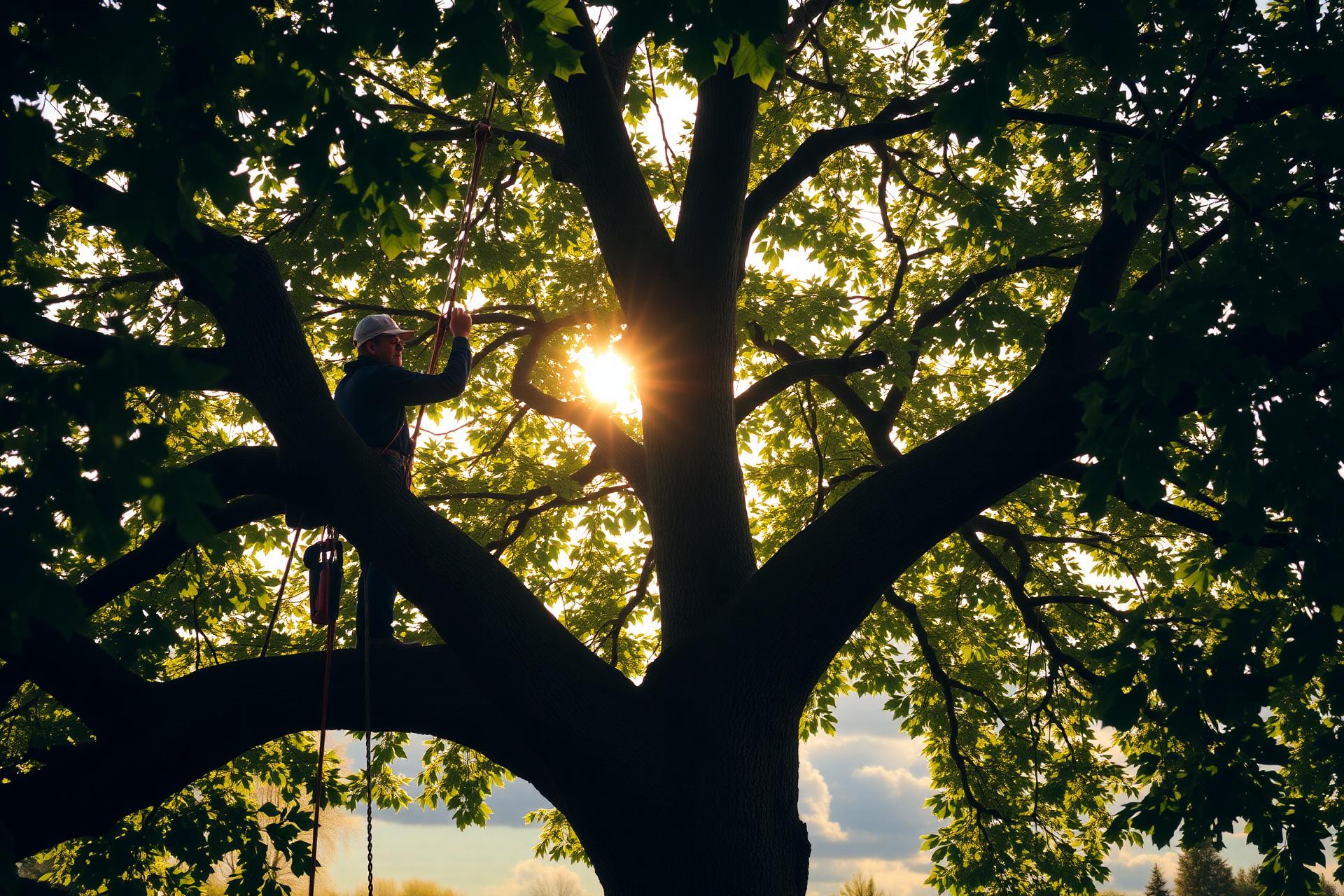
Selective Crown Reduction
Targeted work on specific limbs that are diseased, damaged or in the way.
Overview
What selective reduction actually involves
Sometimes the whole crown doesn't need reducing, just one or two problem limbs. A selective reduction targets the specific branches that are diseased, storm-damaged, rubbing against a structure, or causing a localised issue, leaving the rest of the canopy untouched.
Individual branches are identified, climbed to and either shortened or removed back to the parent stem, depending on condition. Often combined with general crown maintenance such as deadwooding.
Typical reduction
1–4 limbs treated
Results last
Permanent for removed limbs
Impact on tree
Low
Best for
- Storm-damaged or split limbs
- Single branches over a roof, drive or play area
- Limbs showing decay, dieback or fungal fruiting bodies
- Co-dominant stems with included bark
Not ideal for
- Trees that genuinely need an overall reduction in scale
- Cases where TPOs require a wider planned approach
Pros & cons
- Minimal impact on the rest of the crown
- Quick to plan and execute
- Often the most cost-effective intervention
- Removes hazards without changing the tree's character
- Won't reduce overall sail area or height
- Underlying issues (decay, structural weakness) may still need monitoring
How it compares
Selective Reduction vs other reductions
| Reduction type | Best for | Typical reduction | Results last | Impact on tree |
|---|---|---|---|---|
| Total Reduction | Large trees encroaching on buildings or power lines | 10–30% of canopy | 3–5 years | Medium |
| Width Reduction | Branches overhanging roofs, conservatories or garages | 1–3 m off the spread | 3–4 years | Low |
| Height Reduction | Trees taller than their setting can sustain | 2–4 m off the height | 4–6 years | Medium |
| Selective Reduction This page | Storm-damaged or split limbs | 1–4 limbs treated | Permanent for removed limbs | Low |
All four reduction types we carry out, with the page you're on highlighted.
How we do it
On-site process
- 1. Inspection identifies and tags each target limb.
- 2. Climber accesses each in turn.
- 3. Limb shortened or removed back to the parent stem with a clean three-cut technique.
- 4. Wound left to seal naturally. No paint or sealants used.
- 5. Brash and timber cleared from site.
Still not sure?
Selective Crown Reduction FAQs
Can you do this without affecting the rest of the tree?
Yes. That's the point. Selective work is bounded to the limbs you've agreed, and the rest of the canopy is left alone.
Do you remove deadwood at the same time?
We can. Deadwood removal is often combined with selective reduction at no extra mobilisation cost while we're in the canopy.
Related
Other reduction types
Tree outgrown its setting? Let's reduce it properly.
Free no-obligation site visit, fixed quotes, UK-wide coverage.