
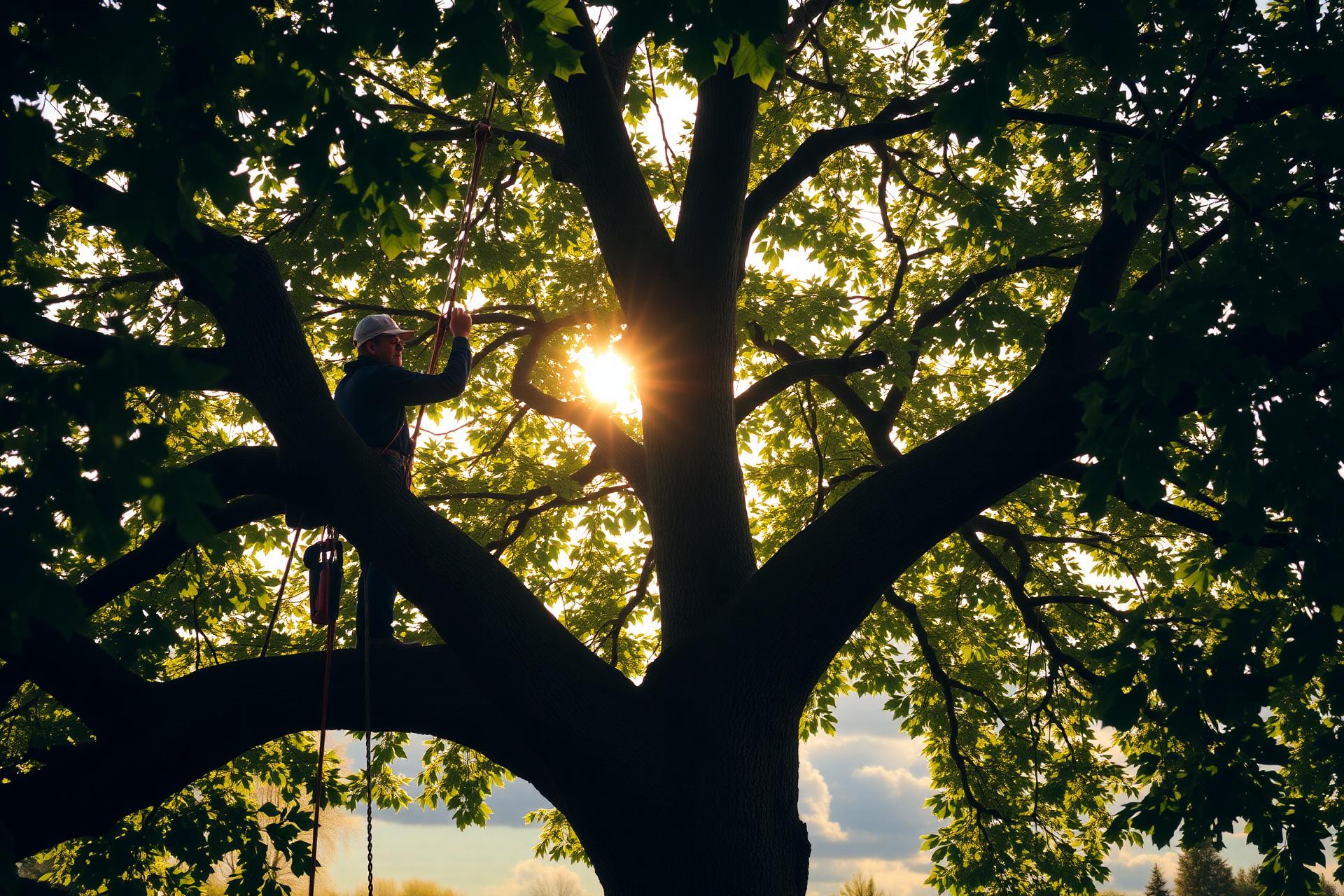
Crown Reduction for Poplar Trees
Populus spp. · also known as Black Poplar, Lombardy Poplar, Hybrid Poplar
Fast, tall, and frequently planted too close to everything.
Mature height
20–30m
Mature spread
8–15m
Annual growth
Up to 1.5m
Safe distance on clay
35m (NHBC Zone H)
Why reduce a poplar
The case for reduction
Poplar was planted extensively in the mid-twentieth century as a fast-growing screen and windbreak, often in rows and close to buildings that were not designed with the tree's mature dimensions in mind. Many of those trees are now 20–30 metres tall and generate consistent demand for reduction, both to manage height and, critically, to reduce the tree's water extraction on clay soils where root-related subsidence is a concern.
Species profile
- Mature height
- 20–30m
- Mature spread
- 8–15m (Lombardy very narrow; other species wider)
- Growth rate
- Very fast
- Annual growth
- Up to 1–1.5m per year in good conditions
- Lifespan
- 40–150 years depending on species
- Commonly found in
- Boundaries, windbreaks, rural properties, planted screens, frequently in rows
- TPO likelihood
- Moderate, some mature specimens are protected but poplar is less commonly TPO'd than oak or beech
- Clay planting distance
- 35m on high-shrinkage clay (NHBC Zone H), one of the highest of any UK species
How it responds
- Tolerance
- Good, Poplar tolerates reduction reasonably well. It is important that cuts are made to proper lateral branches, not stubs, and that the work follows BS 3998:2010 guidelines.
- Regrowth vigour
- High to very high, Poplar regrows vigorously after reduction. Rows of managed poplars often require reduction on a 3–5 year cycle.
- Max reduction
- 30% per visit, Up to 30% can be removed in a single visit, with correct technique.
When to do the work
Best season: Late winter, January and February. Dormancy period. Vigorous species like poplar benefit from late-winter timing as wounds begin healing immediately as growth resumes.
Avoid: No specific seasonal restriction beyond standard nesting season. Standard nesting season precautions (March–August) apply.
Nesting: Nest check required before any work between March and August.
Warning signs to look for
- • Rapid height gain bringing crown close to overhead cables or neighbouring rooflines
- • A row of poplars that was once a screen and is now a wall of trees requiring management
- • Signs of root infiltration into drains, poplar is among the most drain-aggressive species
- • The tree is within 35m of a building on clay soil and has never been assessed for root risk
Disease & pest notes
Poplar canker (Xanthomonas populi) produces oozing lesions on bark and can affect structural integrity. Poplar rust (Melampsora spp.) is a leaf disease, cosmetically significant but not a structural threat. Any canker-affected trees should be assessed by an arborist before reduction is specified, as the work may interact with diseased tissue.
Aftercare
Plan for a follow-up programme. A row of poplars managed on a 3–5 year cycle is standard. On clay soils, consider a root barrier assessment at the same time as any crown reduction work, managing the canopy reduces water demand but does not address root proximity to structures.
Legal considerations
Poplar is not among the most frequently TPO-protected species, but mature specimens, particularly single trees in gardens, can carry orders. Conservation area rules apply as standard. Note that removing a poplar from clay soil carries heave risk, this is a structural matter that should be discussed with an engineer if removal is being considered alongside reduction.
Cost indicator
High, poplars reach significant heights quickly. Access equipment is almost always required for mature specimens, and the volume of material is substantial.
FAQs
Poplar reduction questions
My poplar row is getting too tall. Can all the trees be reduced at once?
Yes, a row can be reduced in a single programme of work. In fact, managing all trees on the same cycle is more efficient and produces a more uniform result than treating individual trees at different times.
Should I reduce the poplar or remove it?
If the tree is on clay soil and close to a building, removal is not automatically the safer option. Poplar roots desiccate clay significantly, and removal triggers a re-hydration process that can cause ground heave. A structural engineer should be consulted before deciding between reduction and removal in those circumstances.
How close to a house can a poplar safely be?
NHBC Standards recommend a minimum distance of 35m between poplar and a building on high-shrinkage clay soil. If you have a poplar closer than this to your building, a root barrier assessment is advisable.
Other species
Browse more trees
Oak
Quercus robur
The most common large tree in English gardens. And one of the most commonly protected.
Sycamore
Acer pseudoplatanus
Fast, vigorous, and seemingly everywhere. Sycamore is the tree that never quite fits the space it's been given.
Common Lime
Tilia × europaea
The most forgiving tree to reduce. Also the one that grows back fastest.
Tree outgrown its setting? Let's reduce it properly.
Free no-obligation site visit, fixed quotes, UK-wide coverage.