
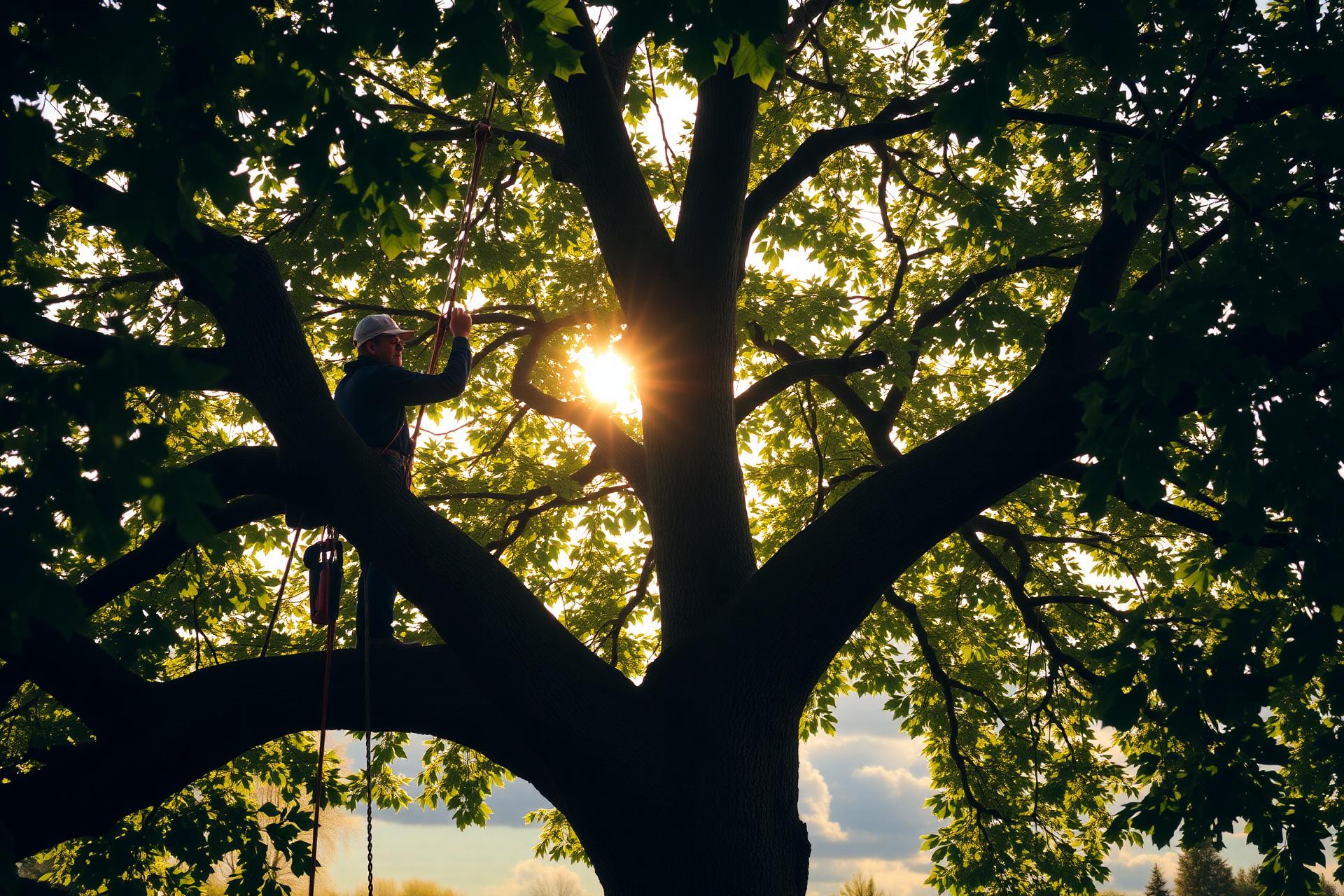
Crown Reduction for Sweet Chestnut Trees
Castanea sativa
One of Britain's longest-lived trees, and one that frequently needs managing before it overwhelms its setting.
Mature height
20–30m
Mature spread
15–20m
Annual growth
30–60cm
Max recommended reduction
25% per visit
Why reduce a sweet chestnut
The case for reduction
Sweet chestnut grows to significant size and has historically been managed through coppicing in woodland settings, demonstrating its tolerance of significant pruning work. In garden settings, it frequently develops a wide, dominant crown that overhangs boundaries and creates heavy shade. Properties in southern England and the Midlands with older gardens commonly have sweet chestnut as a legacy planting that now requires management.
Species profile
- Mature height
- 20–30m
- Mature spread
- 15–20m
- Growth rate
- Moderate to fast
- Annual growth
- 30–60cm per year
- Lifespan
- 700+ years (coppiced specimens); 200–400 years free-standing
- Commonly found in
- Southern England, larger gardens, woodland edges, estates, parkland
- TPO likelihood
- Moderate to high, particularly older specimens
- Clay planting distance
- 20m on high-shrinkage clay (NHBC Zone H)
How it responds
- Tolerance
- Good, Sweet chestnut responds well to crown reduction, consistent with its historic management through coppicing. It compartmentalises wounds effectively and regrows productively.
- Regrowth vigour
- High, Regrowth is vigorous, a managed sweet chestnut typically requires follow-up work every 4–5 years.
- Max reduction
- 25% per visit, Up to 25% in a single visit. The species tolerates this well and its natural vigour supports recovery.
When to do the work
Best season: Late winter, January to early March. Standard late-winter dormancy timing applies. Wounds begin to callus with the approaching growing season.
Avoid: Autumn. As with most deciduous species, fungal pressure is higher in autumn and wounds heal more slowly.
Nesting: Nest check required before any work between March and August.
Warning signs to look for
- • Wide-spreading branches overhanging boundaries, outbuildings, or the main building
- • Dense canopy creating significant shade across the garden
- • Canker lesions on the bark, sweet chestnut blight is a regulatory concern in the UK
- • A tree that has not been assessed or managed in ten or more years
Disease & pest notes
Sweet chestnut blight (Cryphonectria parasitica) is a serious fungal disease established in parts of Europe and subject to plant health regulations in the UK. Any sweet chestnut showing canker lesions, sunken, discoloured bark with orange fruiting bodies, should be reported to the relevant plant health authority (the Forestry Commission in England) before any work proceeds. Oriental chestnut gall wasp (Dryocosmus kuriphilus) is also present in the UK and affects foliage and shoot development.
Aftercare
Monitor for blight symptoms following any reduction work. Sweet chestnut has a long life expectancy and responds well to managed reduction programmes, it is a species that rewards ongoing investment in management rather than one-off interventions.
Legal considerations
Older sweet chestnut specimens are frequently TPO-protected, particularly in estates and older gardens. Sweet chestnut blight is subject to plant health regulations, check current Forestry Commission guidance if blight symptoms are present. Conservation area rules apply as standard.
Cost indicator
Moderate to high depending on size, age, and access. The potential for plant health regulatory requirements if blight is present should be factored into planning.
FAQs
Sweet Chestnut reduction questions
Is sweet chestnut the same as horse chestnut?
No. Sweet chestnut (Castanea sativa) and horse chestnut (Aesculus hippocastanum) are unrelated species. Sweet chestnut produces edible nuts and has long, serrated leaves. Horse chestnut produces inedible conkers and has palmate leaves with multiple leaflets. Their management requirements are different.
My sweet chestnut has orange patches on the bark. What is this?
This may be sweet chestnut blight (Cryphonectria parasitica), which produces orange fruiting bodies on cankered bark. It is a notifiable plant disease, contact the Forestry Commission before arranging any work on the tree.
Can sweet chestnut be heavily managed like a coppice and still survive?
Sweet chestnut has been managed through coppicing for centuries and tolerates significant pruning better than most UK species. Crown reduction to BS 3998:2010 standards is well within what the species can sustain. The key is making cuts correctly to suitable laterals rather than to stubs.
Other species
Browse more trees
Oak
Quercus robur
The most common large tree in English gardens. And one of the most commonly protected.
Sycamore
Acer pseudoplatanus
Fast, vigorous, and seemingly everywhere. Sycamore is the tree that never quite fits the space it's been given.
Common Lime
Tilia × europaea
The most forgiving tree to reduce. Also the one that grows back fastest.
Tree outgrown its setting? Let's reduce it properly.
Free no-obligation site visit, fixed quotes, UK-wide coverage.