
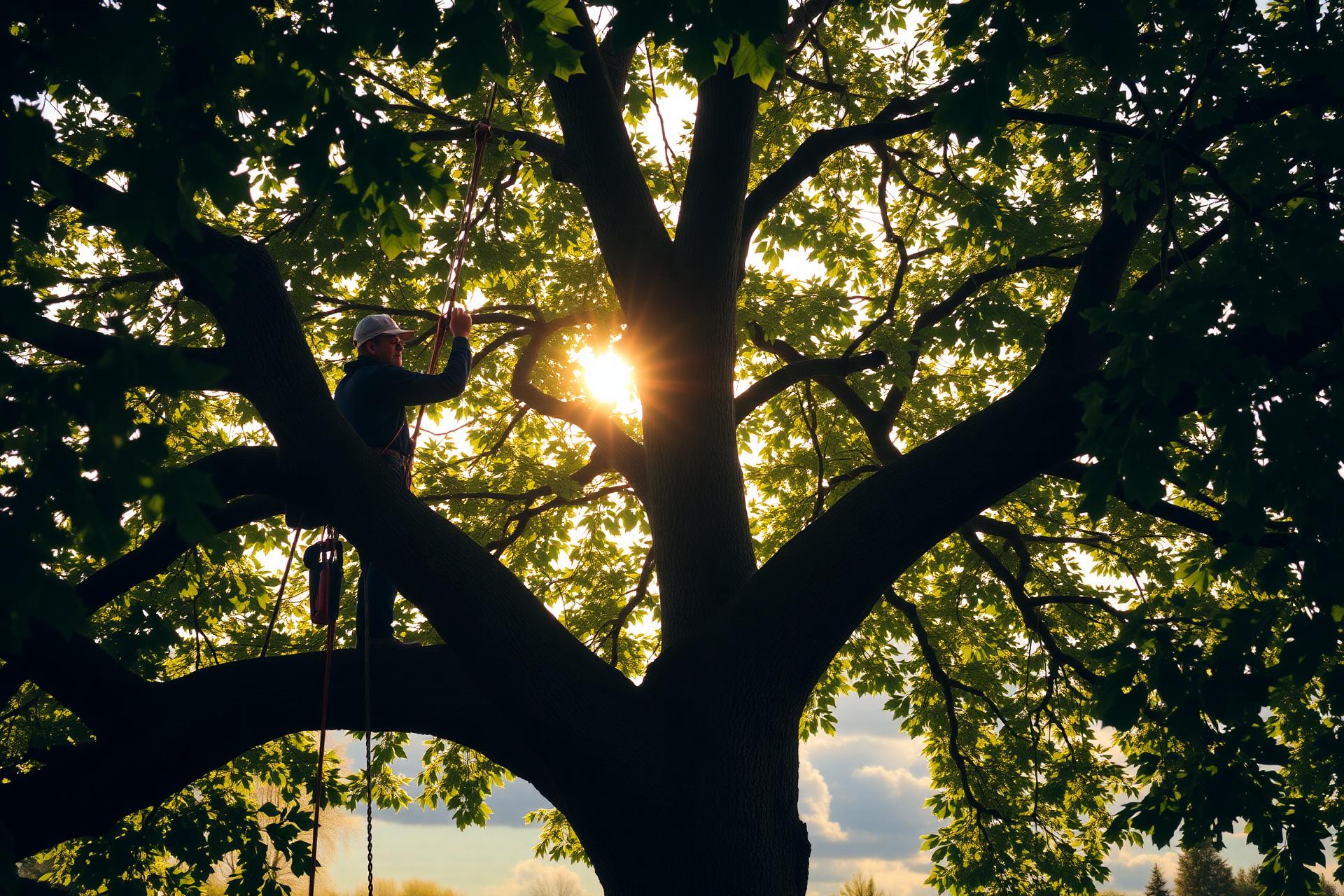
Crown Reduction for Willow Trees
Salix spp. · also known as Weeping Willow, Crack Willow, White Willow
Willow grows fast, reaches far, and drinks more than any other tree in common UK planting.
Mature height
15–25m
Mature spread
15–20m
Annual growth
Up to 1–2m
Safe distance on clay
40m (NHBC Zone H)
Why reduce a willow
The case for reduction
Weeping willow in particular is planted for its ornamental appearance and frequently ends up in a garden where it does not fit. Its growth rate is extraordinary, 1–2 metres per year in favourable conditions, and it reaches heights of 15–25 metres at maturity. Combined with a root system that actively seeks moisture, infiltrates drain runs, and can reach 40 metres from the trunk on shrinkable clay, willow near buildings is a significant structural risk. Crown reduction manages height and reduces water extraction.
Species profile
- Mature height
- 15–25m depending on species
- Mature spread
- 15–20m (weeping willow can spread wider)
- Growth rate
- Very fast
- Annual growth
- 1–2m per year in good conditions
- Lifespan
- 30–100 years depending on species
- Commonly found in
- Larger gardens, near ponds and watercourses, rural properties
- TPO likelihood
- Moderate
- Clay planting distance
- 40m on high-shrinkage clay (NHBC Zone H), the highest recommended distance of any UK species
How it responds
- Tolerance
- Good, Willow tolerates crown reduction well and has significant natural resilience. It is important, however, that reduction is done correctly, cuts to suitable laterals, not stubs, as willow is prone to decay at large stub wounds.
- Regrowth vigour
- Very high, Willow is among the most vigorous re-growers of any UK tree. Without a planned management programme, a reduced willow will return to its previous size within 3–4 years.
- Max reduction
- 30% per visit, Up to 30% can be removed in a single visit. Given the vigour of regrowth, a consistent maintenance programme is more effective than infrequent heavy reductions.
When to do the work
Best season: Late winter (January–February) or late summer (August). Late winter dormancy is ideal for most work. Late summer, once growth has slowed, is an alternative that avoids the peak nesting season.
Avoid: No specific seasonal contraindication beyond nesting season. Standard nesting season precautions apply. Willow does not have the sap bleed issue of birch or the disease timing constraints of Prunus.
Nesting: Nest check required before any work between March and August. Willows near water are particularly likely to host nesting birds.
Warning signs to look for
- • The tree is within 40m of a building on clay soil and has never been assessed for root risk
- • Blocked or repeatedly failing drains near the tree, willow is among the most drain-infiltrating species
- • Branches overhanging the house, garage, or outbuildings
- • The crown has reached a size where significant wind loading is a concern
Disease & pest notes
Willow scab (Venturia saliciperda) and willow anthracnose affect some species, causing leaf and shoot dieback. Watermark disease (Brenneria salicis) is a bacterial disease that causes wilting and discolouration in crack and white willow, affected trees may need to be reported and may not be candidates for reduction. An arborist should assess health before specifying work on any willow showing unusual dieback.
Aftercare
A managed reduction programme on a 3–5 year cycle is essential for keeping willow at a manageable size. Consider whether root barrier installation is appropriate alongside the crown management programme, particularly if the tree is on clay soil within 40m of a building.
Legal considerations
Willow TPOs exist, particularly on mature specimens in waterside settings. Conservation area rules apply as standard. Note that on clay soils, removing a willow rather than managing it carries significant heave risk, the ground that has been progressively desiccated by the tree will re-hydrate and swell. This should be discussed with a structural engineer before any decision to remove.
Cost indicator
Moderate to high, willow reaches significant heights and produces large volumes of material. Waterside access can complicate the job.
FAQs
Willow reduction questions
My weeping willow is close to my house on clay soil. Should I remove it or reduce it?
This is a structural question as much as a tree question. On high-shrinkage clay, removing a large willow triggers ground heave as the soil re-hydrates, which can be as damaging as the original subsidence risk. A structural engineer should assess the situation before you decide. In many cases, managed crown reduction alongside root barrier installation is the lower-risk approach.
How often does a willow need to be reduced?
Every 3–4 years is realistic for a managed programme. Willow's growth rate means a longer cycle than that tends to produce a tree that has effectively outgrown its previous reduction.
Can willow roots really reach 40 metres?
On high-shrinkage clay soil, the recommended exclusion zone given by NHBC Standards for willow is 40 metres, greater than any other UK species. The roots follow moisture and will extend to wherever the soil moisture gradient draws them, which can be very far from the trunk in dry conditions.
Other species
Browse more trees
Oak
Quercus robur
The most common large tree in English gardens. And one of the most commonly protected.
Sycamore
Acer pseudoplatanus
Fast, vigorous, and seemingly everywhere. Sycamore is the tree that never quite fits the space it's been given.
Common Lime
Tilia × europaea
The most forgiving tree to reduce. Also the one that grows back fastest.
Tree outgrown its setting? Let's reduce it properly.
Free no-obligation site visit, fixed quotes, UK-wide coverage.